Monday, November 24, 2008

The Bird's Nest.

The Bird’s Nest.

Visiting the Olympic Garden in the Northern part of Beijing these days is a little bit like going to a mausoleum. The park, contrary to its present lack of TV coverage, still exists, scattered with the enormous remains of this year’s Games. The newly opened subway lines, in place to ferry guests back and forth between venues, are newly closed. There are no more reporters, no more athletes, no more photo finishes, no more medals to be awarded, so what’s left? For one thing, there are more fences.

But if you had to choose one building to symbolize the voracious energy of this year’s Olympics, set in a country trying desperately to prove itself to the world, you could do worse than the Bird’s Nest. I would be willing to guess that the majority of people on the planet have seen it at least once, a latticework of steel beams, graphic and iconic, with a characteristic dimpled top.

Countless wide-eyed critics have noted the building’s embrace of “openness”, the way it allows the eye to travel from the exterior to the interior and back freely, a consequence of its exuberant yet simple façade. They cite the fact that the Chinese government consented to this design as a symbol of China’s own increasing “openness”, openness to the West, openness in an economic sense, openness in a social sense. You’ll have to forgive me if I don’t take them at their word. There are times when it pays to look a little deeper into the context of such a place instead of linking the façade, literally and figuratively, to the changing ideology of the country it’s built in.

Still, the Bird’s Nest is undeniably a loose building. It’s a little shaky, a little more of a laugh than a frown. The photos that have been widely published, a far off perspective, a wide-angle lens, don’t do the building’s spirit justice. The Bird’s Nest dances around you as you walk through it. A few steps into the stadium, the geometric flatness of the façade becomes a riot of crisscrossing lines going everywhere in all 3 dimensions, a Dr. Suess landscape in a metallic future.


The color palate of the building, a fitting deep red mixed with the gray of steel, also enlivens the interior stadium. A surprisingly small playing field surrounded by seats colored the same deep red, the space doesn’t quite match the epic scale it had on the television screen. More than color though, what brings the Bird’s Nest its exuberance is the slicing interplay between light and shade just inside the façade. The shadows are sharp enough to cut yourself on, and the patches of light beam down in heptagons.

The rhythms play themselves like a symphony of synthesizers.


The Bird’s Nest is a great piece of architecture. Still, we don’t have to take this postmodern smiley face at first blush. The team that designed the stadium is a bit of a surprise: the always great, always willing to embrace the new, architectural firm of Herzog and De Meuron, working with the Chinese artist Ai Weiwei, a known provocateur who once filmed himself dropping Ming Dynasty vases onto his studio floor, smashing them into pieces. In this more civilized role, he was labeled a 'design consultant'.

The two have worthy reputations as artists, and it’s a credit to the Chinese government that they were willing to support the team in building such an avant garde structure. And yet, looking a little deeper still: in the process of building, Ai Weiwei renounced any involvement with the project, reviling his involvement with the Chinese government and loudly criticizing China’s continued human rights problems.

Herzog and De Meuron haven’t commented apart from reaffirming that Ai Weiwei was an incredible help and influence on the project. Architects are said to be colorless in the face of such international politics as long as the money is there, and many have faced criticism for building in Communist China.


And then there are the fences. The Olympic park is now crisscrossed with high white fences, blocking off the natural flow of people in and around the mammoth structures. A ticket to get into the Bird’s Nest is 50 RMB, about 8 USD, which doesn’t sound like much, but for an afternoon outing it really is prohibitively expensive for a lot of Chinese. Across from the Bird’s Nest is the Water Cube, another 30RMB to even get close to; the fences start 100 feet away.


The problems, the political flashpoints and the are still there, they’re just not immediately clear. The Bird’s Nest is an incredible experience for those that can get in. It’s a shame that some of the artistry and the public accomplishment of the Olympic venues have been lost to politics and profit.

But still, the taste the stadium leaves in your mouth is like skittles.


PS: Hiroshi Sugimoto is my best friend.

Tuesday, November 11, 2008

Snapshots.

Snapshots.

I've been a little busy to write longer pieces lately, but I wanted to put a bunch of random stuff up anyway. It's from the past few weeks, our trip to Harbin, around our school. I hope it's like a little bite of information, a little less like a message and more like free association.


An older Chinese woman sits outside in a park, on a stone bench overlooking a lake drenched by weeping willows. She's retired and lives with her son's family.


Twins walking down Chegongzhuang road, stopping to compare the shoes below their identical tights.


A tiger in the Harbin tiger reserve, "wildlife" shot through with van tracks to ferry tourists to and fro. The tigers take up most of the space of the reserve, with small areas for lions and, inexplicably, cheetahs.


A little girl in a panda hat on the way to Xizhimenwai subway station.


Passing the mic at KTV in Harbin, karaoke in one room equipped with comfy couches and monitors, good for any number of people to get drunk and/or sing songs in private.


A meat stall in the evening. November gets dark pretty early.


Manikins legs in the trash dump.


Hannelore waking up on the train to Harbin.


St. Sophia Church, one of the last remaining truly Russian buildings in Harbin. The bottom has been turned into a horrifying tourist trap, but the ceilings were left unrestored and mesmerizing.


A kid in the amusement park at the edge of one of Beijing's gardens.


Walking down Chegongzhuang road.

Wednesday, November 5, 2008

Barack Obama.

The day that Barack Obama won the presidential election, in Beijing. We sat under the trees, watched the branches sway and stared to the sky for some sign of the heavens moving.

Tuesday, November 4, 2008

Boys and Girls in Beijing.

Boys and Girls in Beijing.


What do you get, coming out of high school with a head full of cheesy pop songs, a thousand movies about cliché romances and, thanks to the Chinese government, more than a working knowledge of contraception?

Not all that you’d guess, it seems.


One of the best things about our program here in Beijing is that we have a much deeper understanding of what things are like here in China for the kids, if just for the simple reason that we live with a bunch of twenty-year olds. So obviously we talk to them about things we have in common: boys and girls, girls and boys, taking sides.

What does that entail? All the crushes are still there; after all, we are a bunch of college students thrown together into one building. This includes any combination you could think of, you’re as likely to hear Chinese girls gossiping about the American boys as you are to hear the American boys discussing which Chinese teacher is hottest.


My roommate’s friend, another roommate here, has a boyfriend. They are interminably cute together. He wears goofy glasses and walks arm in arm with her as they head off to school, not too far away from our dorm. Every so often they exchange kisses on the cheek or something slightly more serious of an evening. The thing is, I’m not sure how far it goes beyond that.

The other day, as we were heading out to eat dinner, we ran into the couple. The girl was annoyed. Our shifu (doorman/handyman/house dad) wouldn’t let her boyfriend into the building. The reason? “He told me it’s too late,” the girl said, “he told me that there’s class tomorrow so we should be studying.” She laughed when I said that the shifu wasn’t her dad. So how are the Chinese kids supposed to get it on?


I suppose there’s always the clubs. Alcohol and dancing! Drinks and not very many clothes! Too bad there are the same problems here that we find everywhere. Does he like me? Is this just tonight? Why is she with that other guy?

Why are there so many Europeans? And why is everyone drunk?


I’d have to guess that it’s a little bit of a change for some of the Chinese students that didn’t really go out like that before. This past weekend was Halloween. A group of 30 CET students and roommates went out to a club and then came back at 5 the next morning. One of my friends, a Chinese girl, was worried that the way she danced made the other girls, American and Chinese, think badly of her. “A lot of Chinese girls can dance like that,” she said, “but they just don’t in public.”

This is also about double standards. A girl, dancing with all the guys, seen too often with different people? A little too open-minded? Telling some that they have a kaifang sixiang, literally an open way of thinking, is tantamount to calling them a slut. The same classification doesn’t really apply to guys. I guess it’s the same in America.


There are still the same non-intersecting lives. Girls are pretty much foreign territory to some of the Chinese guys, my roommate included. Do you want a career? Do you want a successful life? Maybe it’s best if you don’t have a girlfriend in college. Maybe it’s best to focus on what’s really important: learning. Drowning in textbooks, you can curl up in bed with your English primer and go to class in the morning.


The battle lines are laid like this: All the guys want the prettiest girls. All the guys want the girls that are unspoiled, and they all hope that it’ll be their First Time. Is it usually? I don’t know, I don’t really know if that kind of thing is quite open to discussion. As for the girls? Sometimes they’re still just dancing to have fun.


“Do you want to come dance with me?”

“Sure.”

Delays.

Hey all,

Sorry for the absence, there was a midterm, then a Fall break, Halloween, then a bout with food poisoning, and...

Monday, October 6, 2008

Modern Sky Festival.

Modern Sky Festival.


Last week we went to the Modern Sky Festival, a music festival in Haidian park, Haidian district, Beijing. A music festival. You’d think it would be easy to get to, wouldn’t you? When we got out of the subway, Haidian park, a huge body of green on the map, was nowhere to be seen. It wouldn’t be seen for another hour and a half. What we crossed through was more akin to a post apocalyptic suburb of an abandoned metropolis. Where there weren’t highway overpasses there were fences. Apartment buildings stood up like ladders leaned against the sky, a solid grey by late afternoon. They seemed to be growing a lot of trees there. Maybe it’s not hard to see why, with the empty shells of luxury housing complexes shrouded in transplanted forests.


When we drew closer to the venue itself, the streets were bathed in red lights and maintenance workers shambled away from the stages in tired groups. The sound of drums started to rise against the chatter of the crowds.

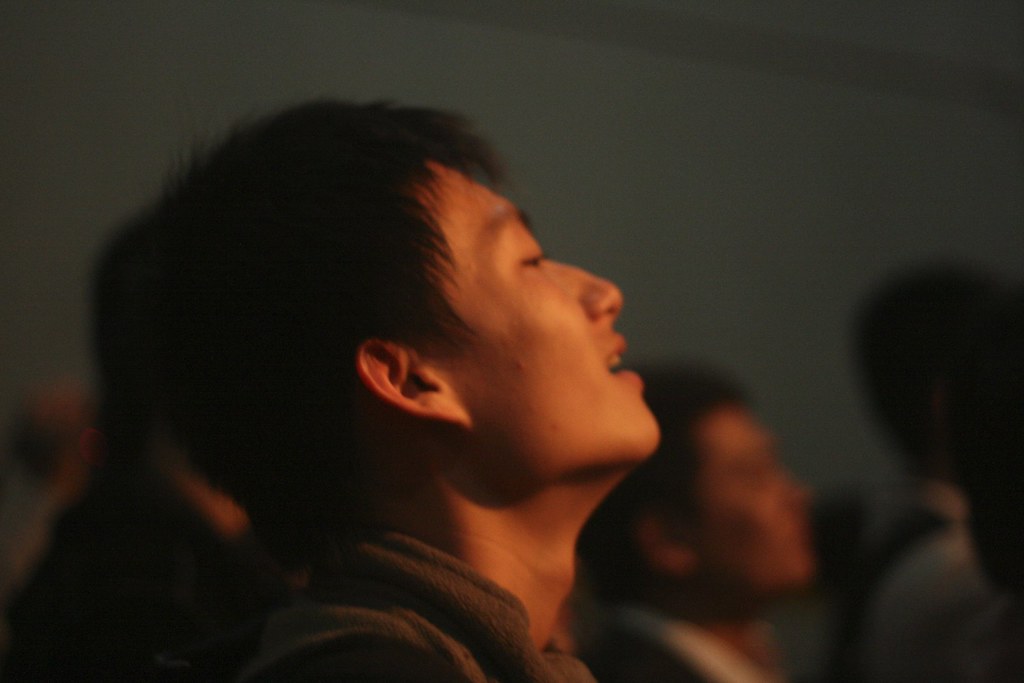
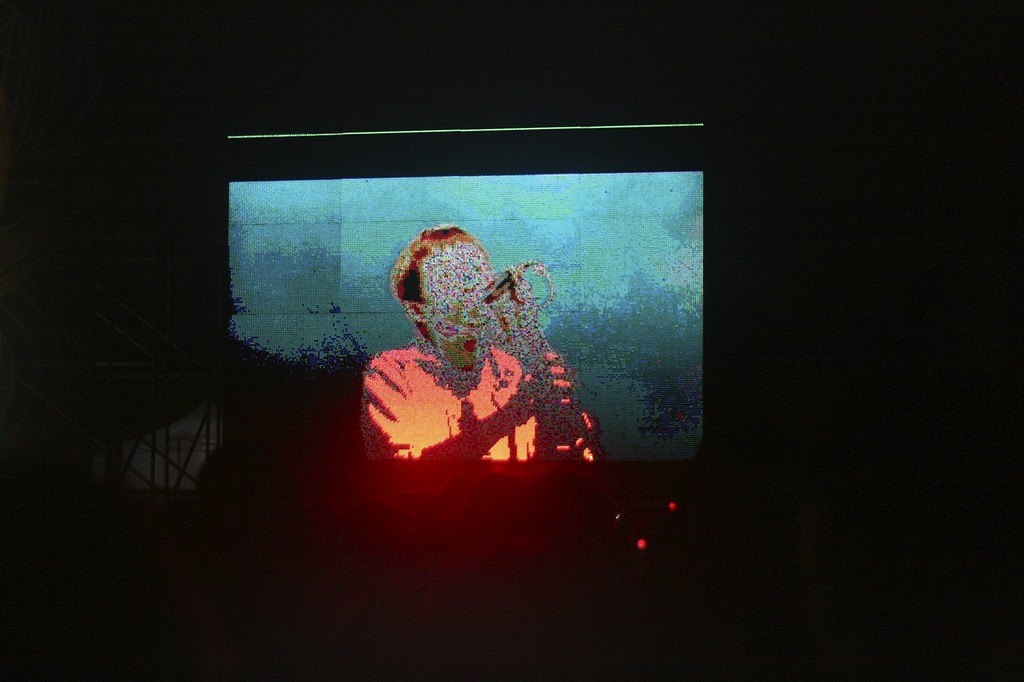
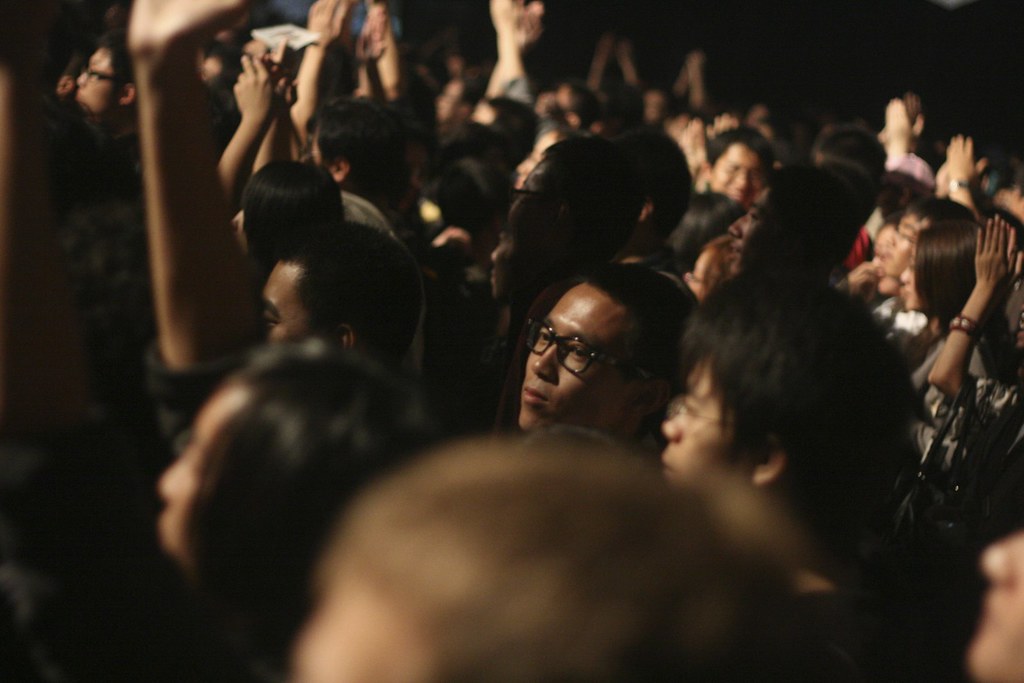
We paid for our tickets, went inside, and passed crowds of stalls and milling teenagers to get the main stage. The band was some kind of Euro-techno-pop-y outfit. Not bad, it definitely had everyone dancing. Twin screens stood on each side of the stage, blaring neon-tinged video of the musicians. The girl on screen yelled into the mic. We decided to head to the smaller stage, where someone we had already heard was playing. This was Zhou Yunpeng, a blind folk singer who has already been called China’s Bob Dylan.


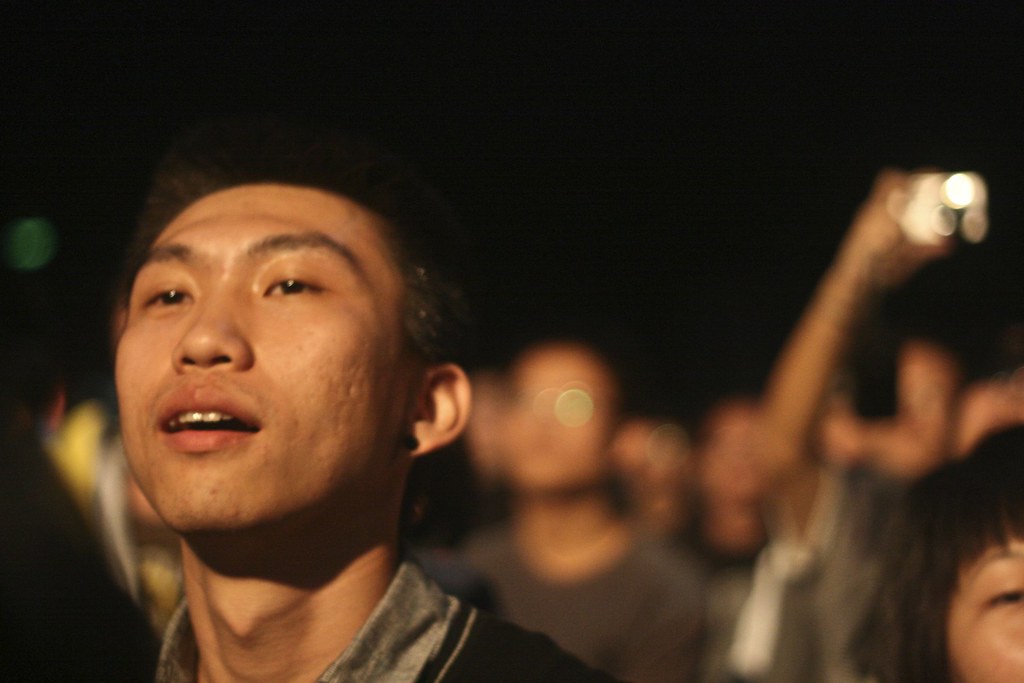
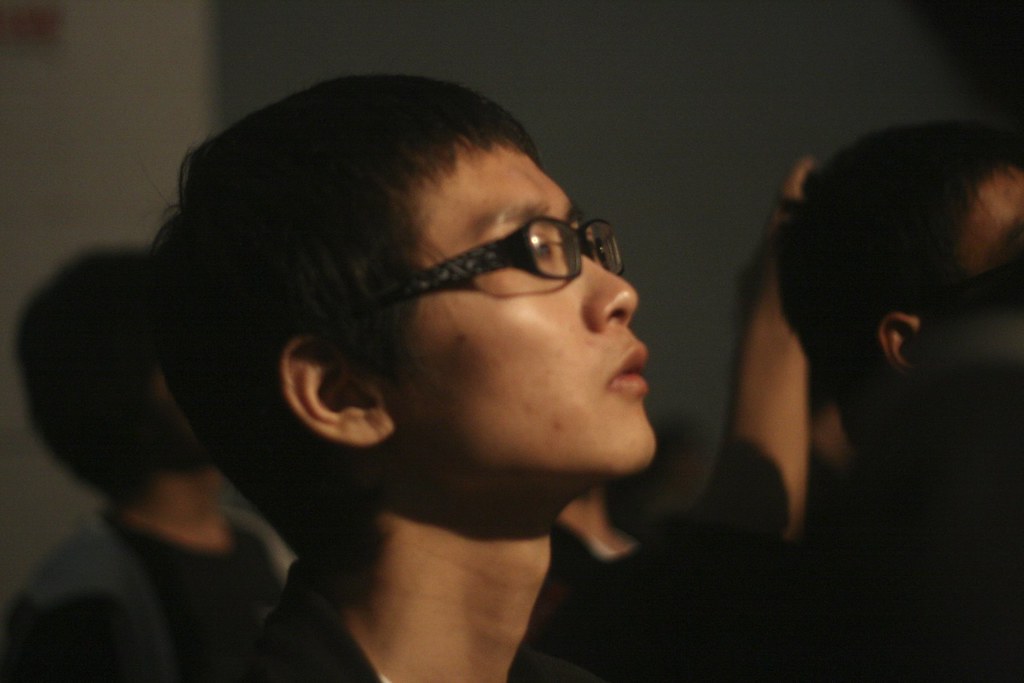
We caught him in the middle of the one song we know. On the album it’s a sparse affair of Zhou Yunpeng’s operatic voice backed by a chorus of traditional sounding voices. The live version was a little more sprawling with a backbone played on an upright bass by a hip looking Chinese guy, head bopping. I couldn’t understand more than 10 percent of the lyrics, but looking around at the faces of the people around me, I saw enough of the story.


This kind of folk music, long taken for granted in the US, recently re-embraced by the indie crowd, is rare in Beijing. When I played Zhou Yunpeng’s song for my roommate, he couldn’t believe it was a local band. Hong Kong? he asked. American? The slow acoustic nod of Zhou Yunpeng’s music masks a more bitter urgency, more ambitious aims. One song, translated ‘Chinese children’, is an epic drift from highs to lows corralled by the singer’s huge voice.

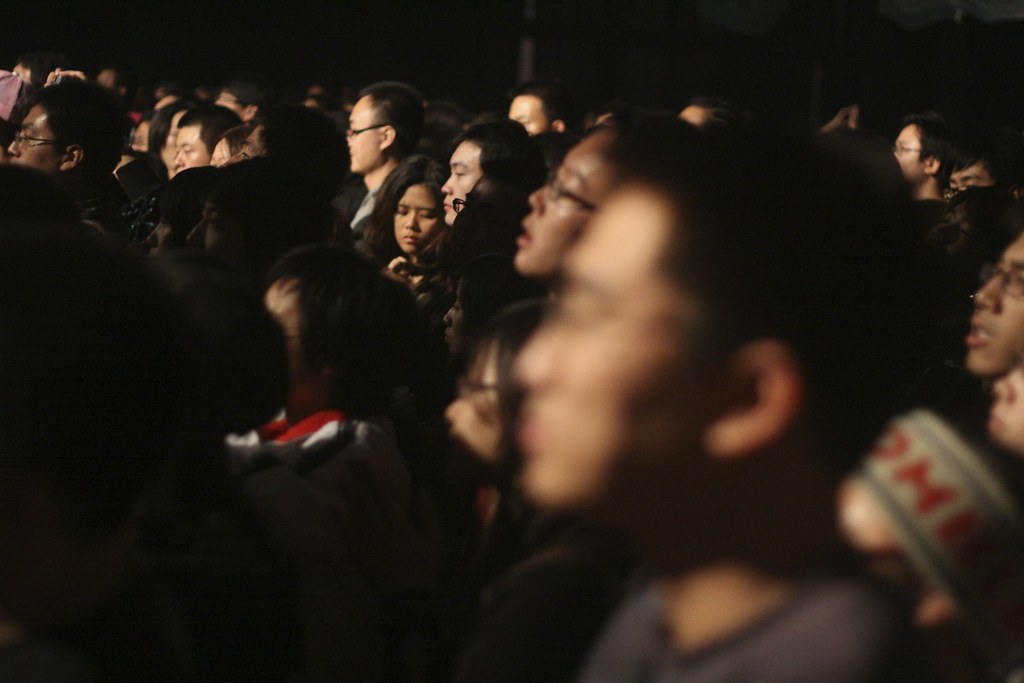
And where is this voice coming from? A guy perched on a chair onstage, black sunglasses surrounded by masses of long, black hair. Guitar in hand, he doesn’t make much motion as he sings. That doesn’t stop his voice from rising high above the audience packed into the hanger-like space. They shout back his words.


Obviously the crowd is mostly younger people. Despite a fair amount of Europeans and Americans among the Chinese, there really isn’t a huge international presence to the Modern Sky Festival. The annual festival usually includes one or two big name Western acts, but this year every band is Chinese. Due to complications with the Olympics, many concert venues were forcibly told to cut back on their schedules. The festival is no exception. The absence of such illustrious stars as Avril Lavigne is no loss. This year’s Modern Sky showed that the Chinese indie, rock, and pop scene can stand all on its own. Quite a feat considering that only last year the Chinese government banned Carsick Cars, the country’s best indie band, from opening Sonic Youth’s Beijing concert.

The fact that Modern Sky Festival went off without a hitch is not to say that music is no longer a political entity in Beijing. The younger generation is embracing the music as well as the message that creativity is not a province of the government. The music certainly has a mind of its own. One of Zhou Yunpeng’s songs, “To buy a house”, corners the trouble with finding your own space in a city where most of the property has been bought up by families and the government. Carsick Cars’ best song is ‘Zhongnanhai’, a reference to the cigarette brand as well as a sendup of the Chinese government’s state compound of the same name.


Woodstock the Modern Sky Festival is not. It’s still a blatantly commercial affair with ads rising up on most surfaces. But still, consider the context. This is not entirely mainstream music. This is China. The two don’t often mesh, but for three days, they co-existed pretty well. Though Carsick Cars’ screams of guitar noise might’ve been a little out of place among cell-phone ads, it was who was hearing their music that mattered most. I’m willing to bet they made a few hundred converts.


For those of you looking to know if the kids are still alright, in China, they’re still going. This is the real deal. It is art, music and a protest. Zhou Yunpeng is not a voice for everyone, but for those who hear him, I think it’s a comfort beyond words. As for Carsick Cars, after an hour and a half dancing, you still won’t know what hit you. These are things that cannot be co-opted.


I hope I’ve made a few people want to hear this music. If you do:
Carsick Cars myspace is here: http://www.myspace.com/carsickcars , I highly recommend ‘Zhongnanhai’
Zhou Yunpeng’s song is uploaded here: https://www.yousendit.com/download/bVlBblFGT004Q1JjR0E9PQ
(sorry, I don’t know song name, album, track, etc, it’s from a mix. But still awesome)

Thursday, October 2, 2008

Hiking.

Hiking.


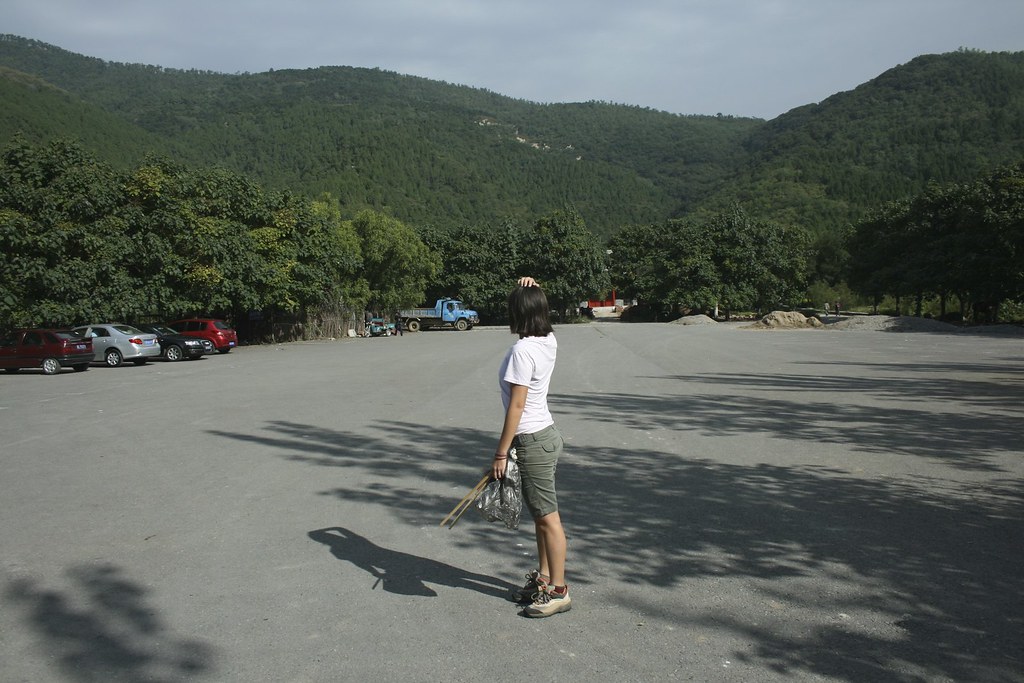
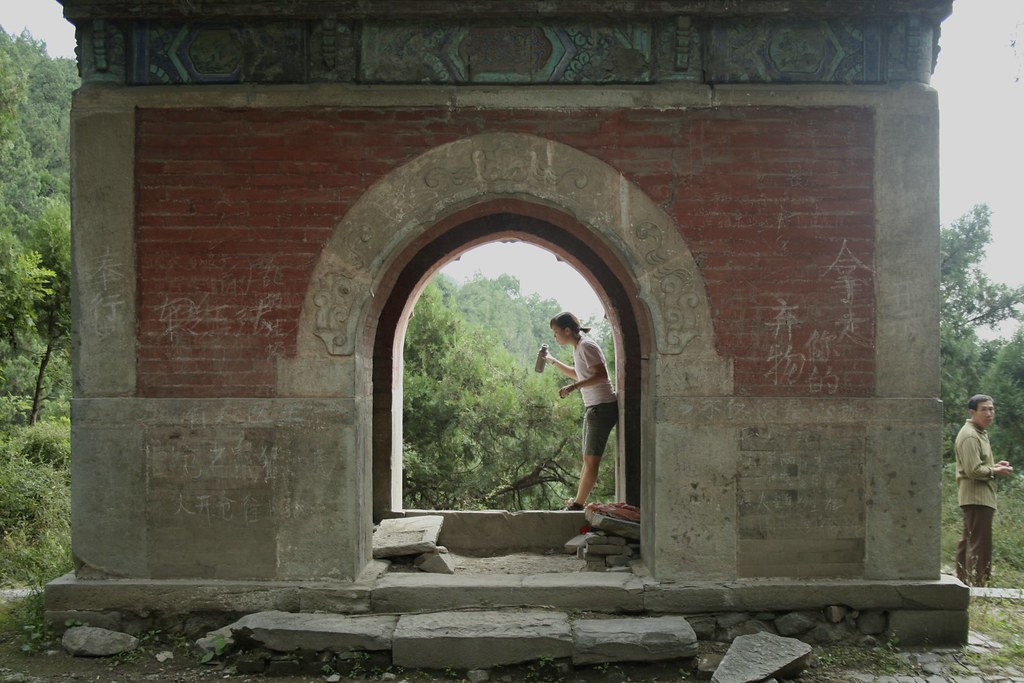
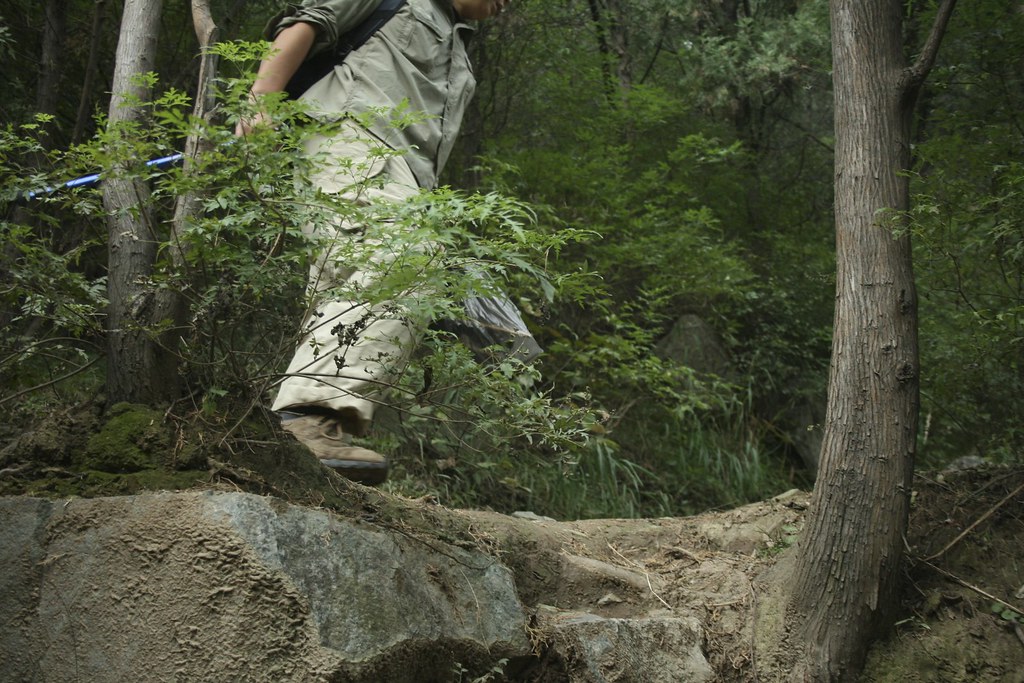
This past weekend we went to Fragrant Hills in Beijing's Northwest to go hiking and pick up trash, trying to help at least a part of the environment in China. The trip was organized by CET, our study abroad program. It was an early trip, so everyone was a little yawn-y after sleeping on the half-hour bus ride. When we woke up we were surrounded by mountains.


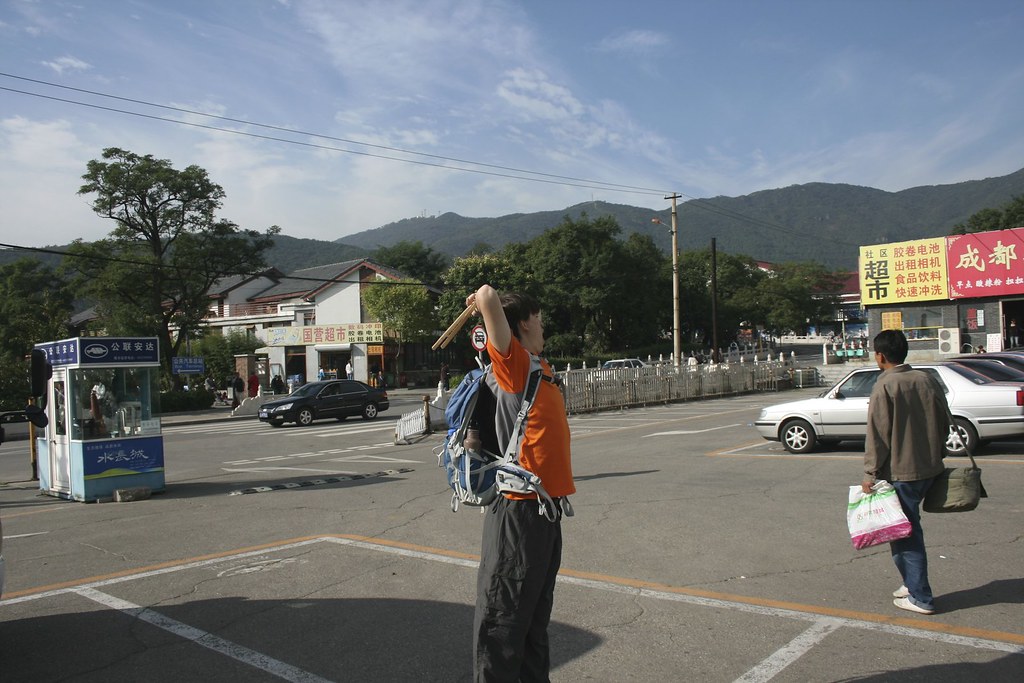
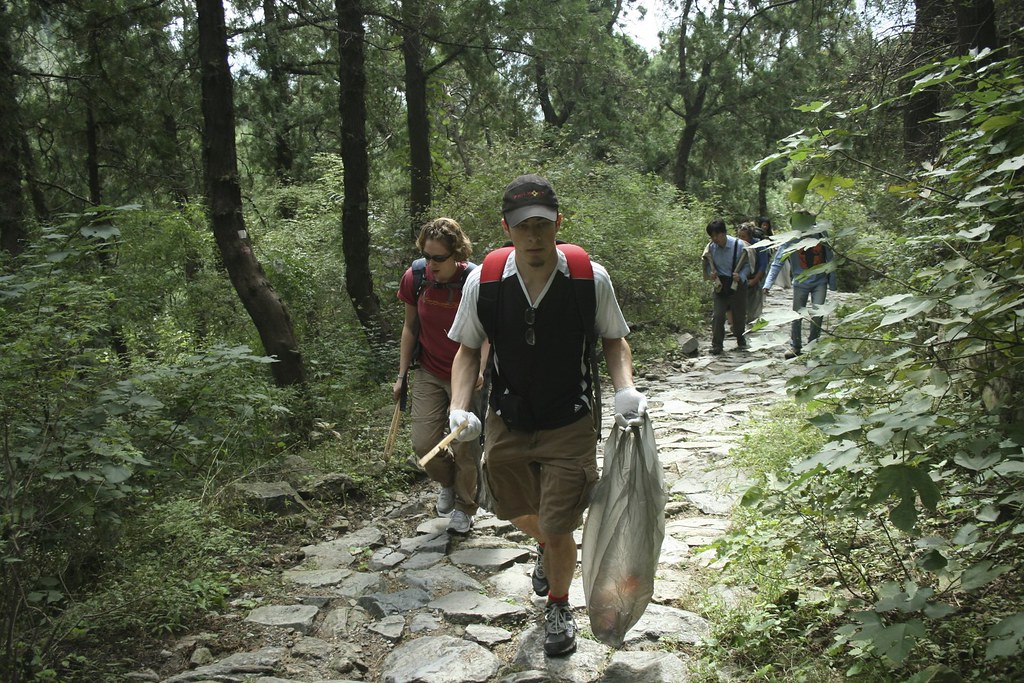
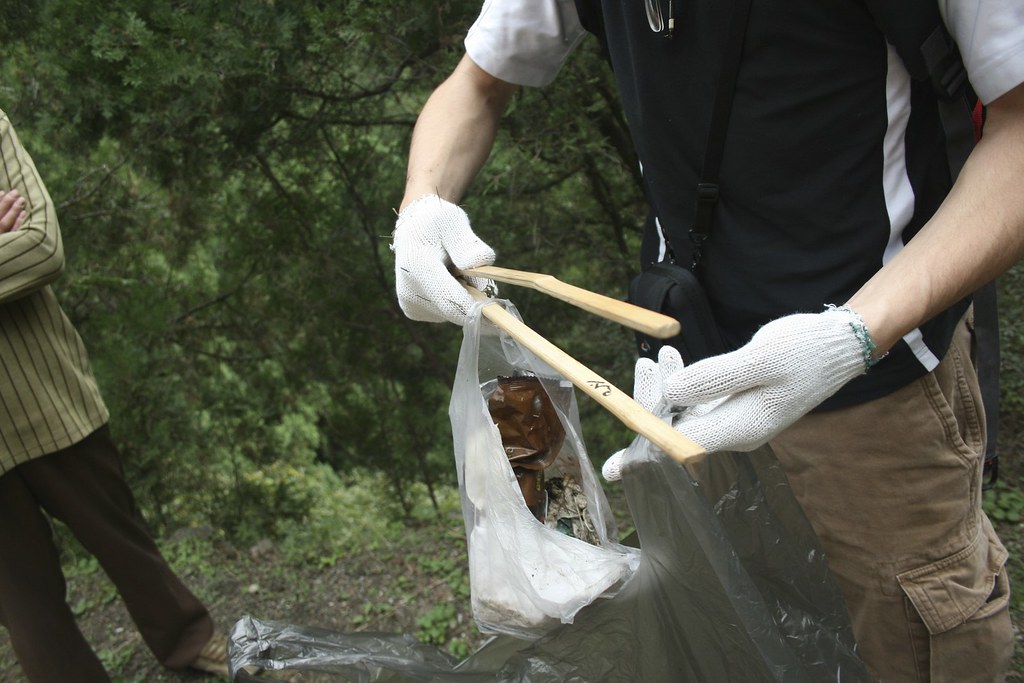
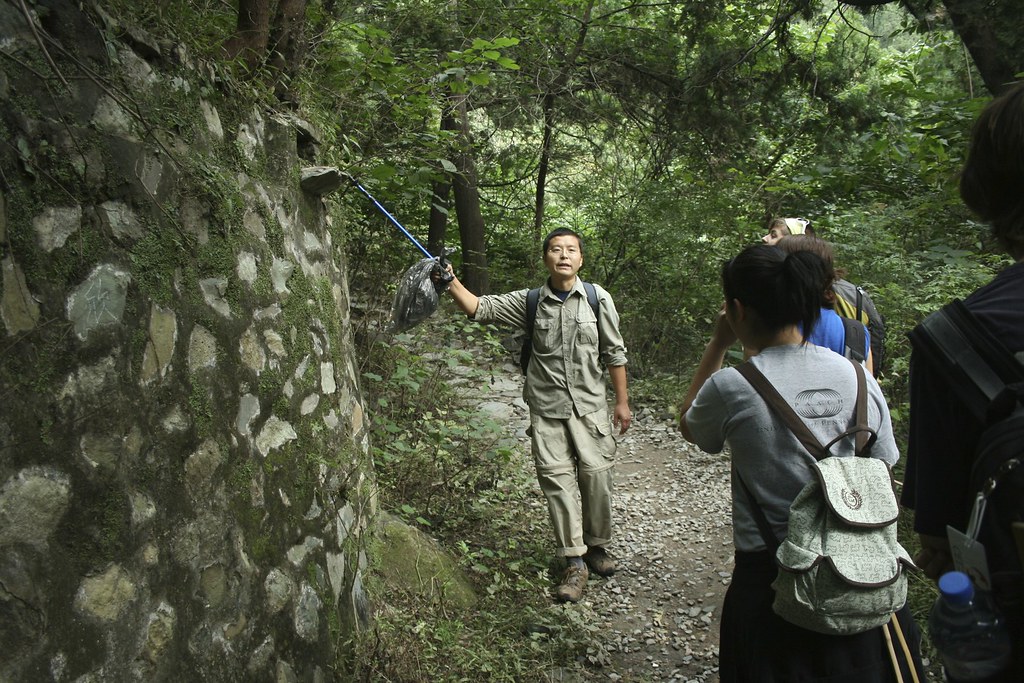
Our leader, a cool girl named Lauren who’s the American head of the Beijing CET office, passed out garbage bags and bamboo tongs and we all suited up. We met our guide, an intrepid looking member of the mountain’s hiking club who brandished his hiking pole while Beijing-accented Chinese spilled out of his mouth. Then we started up the mountain.


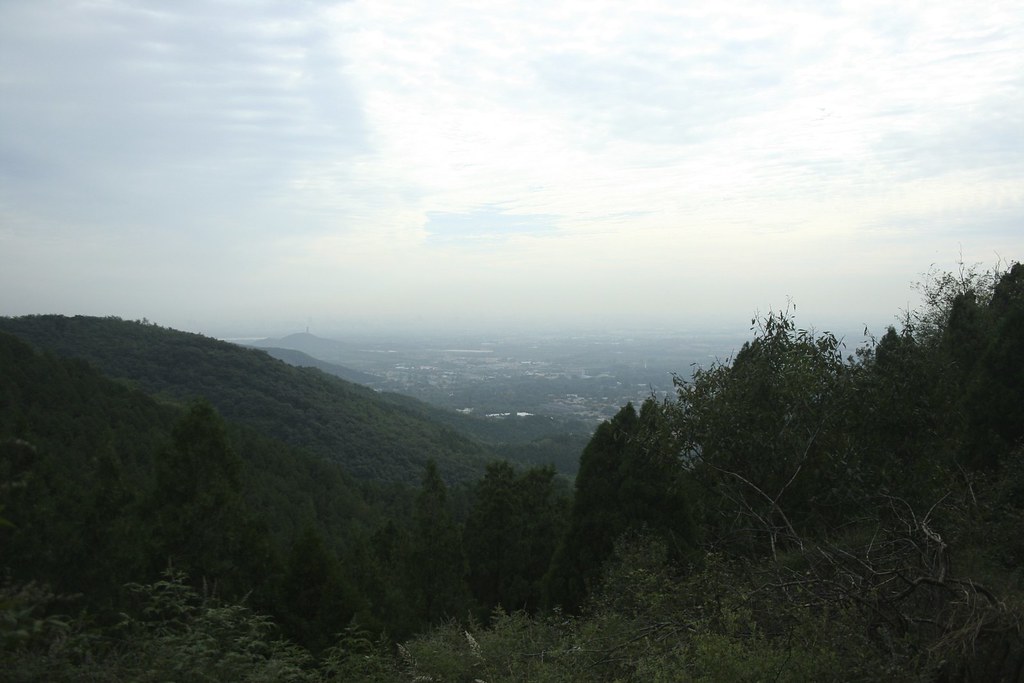
The hike was listed as medium to high difficulty. It was real hiking, rock climbing and all. It’s really incredible how you can be in the middle of one of the biggest cities on the Earth and in half an hour be in the mountains. There’s no hint of the city out there until your head pokes through the trees and you see the blankets of gray over tiny buildings. I’ve loved every trip we’ve taken out of the city and this was no exception. You can feel the air quality change, and you are utterly surrounded by wild forest.


Our guide stops every so often to tell us about a particular tree, a plant, a little piece of the place. He’s really proud of the mountain and it’s not hard to see why. For all of Beijing’s development, places like this still exist because people care deeply about them.


Beijing’s interaction with nature is an interesting one, I think. On the one hand there are the people like our guide and our fellow climbers. Among the people that passed us on their way to the top were spry seniors clambering over the rocks like children and a shaved-headed middle aged man climbing in shoes and track shorts and little else. Needless to say, they’re all in pretty good shape. There are also meandering couples listening, for some strange reason, to traditional music blasting out of their cell phones as they walk. It’s an odd mix of wanting to throw yourself into ‘nature’ and yet to stay out of it. I think the biggest motivation of all though is just to enjoy yourself. It’s nice being out here. It’s good exercise and it’s a beautiful place.


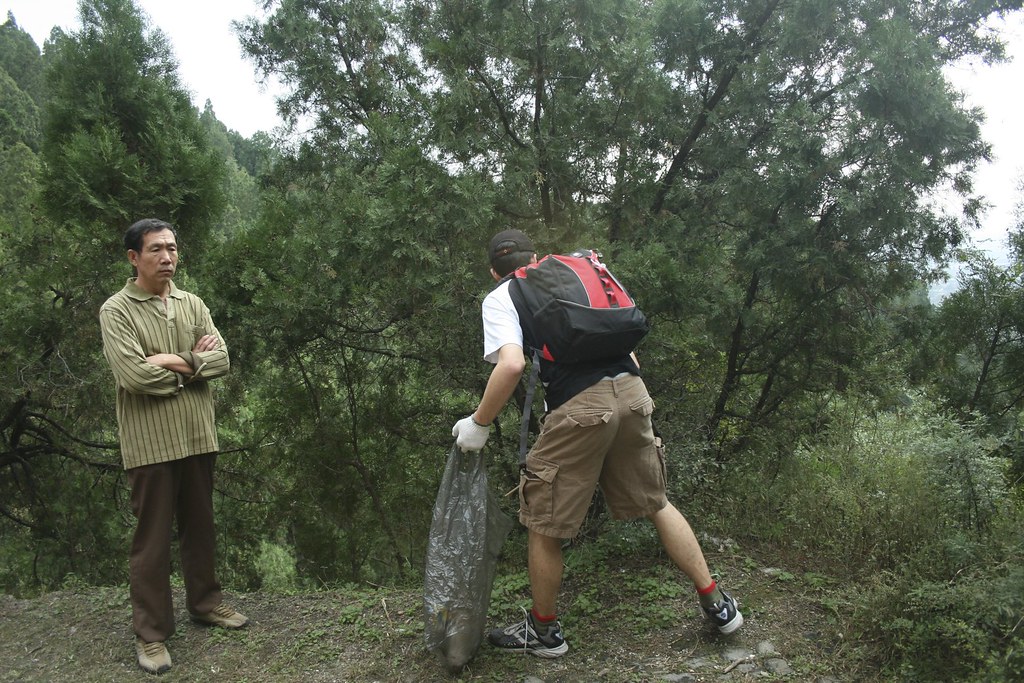
Our caravan of students, about 10 in all, stops whenever we see garbage on the ground. There’s actually not too much, outside of the omnipresent cigarette butts at resting spots. Our guide explains that he doesn’t often have Chinese people participating in these programs, most of the time the trash-collecting groups are foreign tourist volunteers.

When we get to the top of the mountain, we find a small ramshackle house surrounded by pecking hens and vegetable patches. The front room is a restaurant with an old couple beckoning from inside the doorway. Behind it looms a monstrous wood and cement lodge, not yet finished. Off to the side is a futuristic looking signal tower, all steel and yellow paint. The workers tell us it communicates with weather satellites.


And here we are standing on the ground. As we start to climb back down the mountainside, we cross through a few flat plains of grass and trees that look like plateaus surrounded by the valleys of the mountains.


We walk down roads that were built for cars and trucks, I assume, to make their way up to the top. The gutters are littered with cigarette butts and drooping plants. There are strange bugs and a praying mantis. The tanned cement stretches out and disappears into the trees.


We spend a good 3 hours getting back down, constantly going down thinner paths into denser woods. Still, piles of discarded food cartons crop up every so often. As we make our way down the thinnest trail, we dodge underbrush crowding our legs and spiderwebs around our heads. Our now full trash bags tied to our backpacks, our shoes skid on rocks that skitter down in front of us.


When we finally reach the ground, we land in the Beijing Botanical Gardens. There, a more genteel version of nature awaits those who may not want to confront it on such a personal basis.