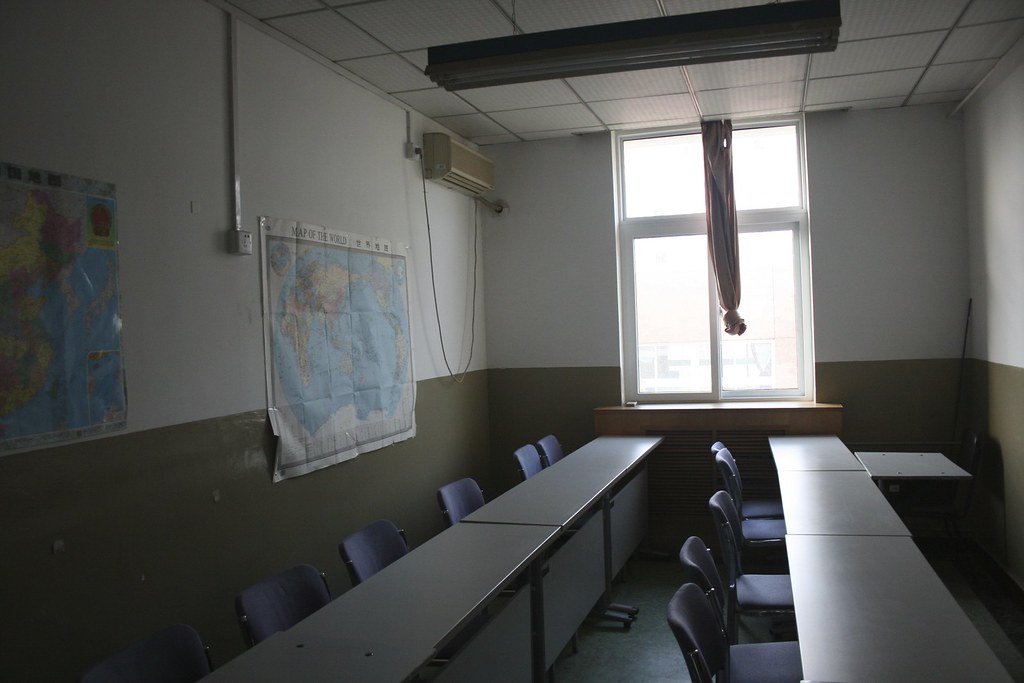
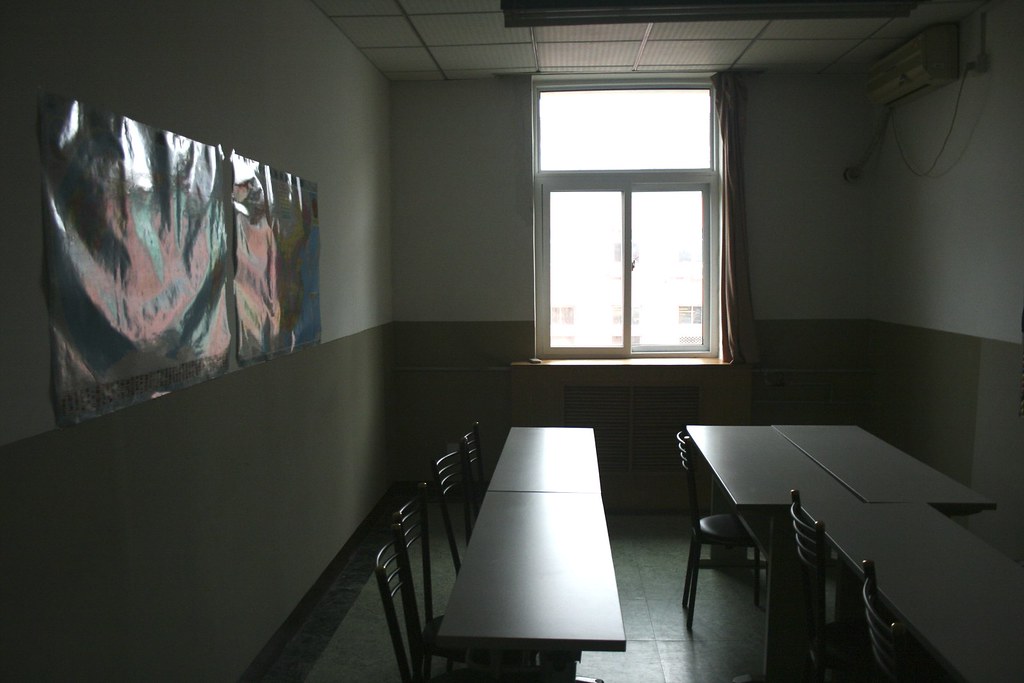
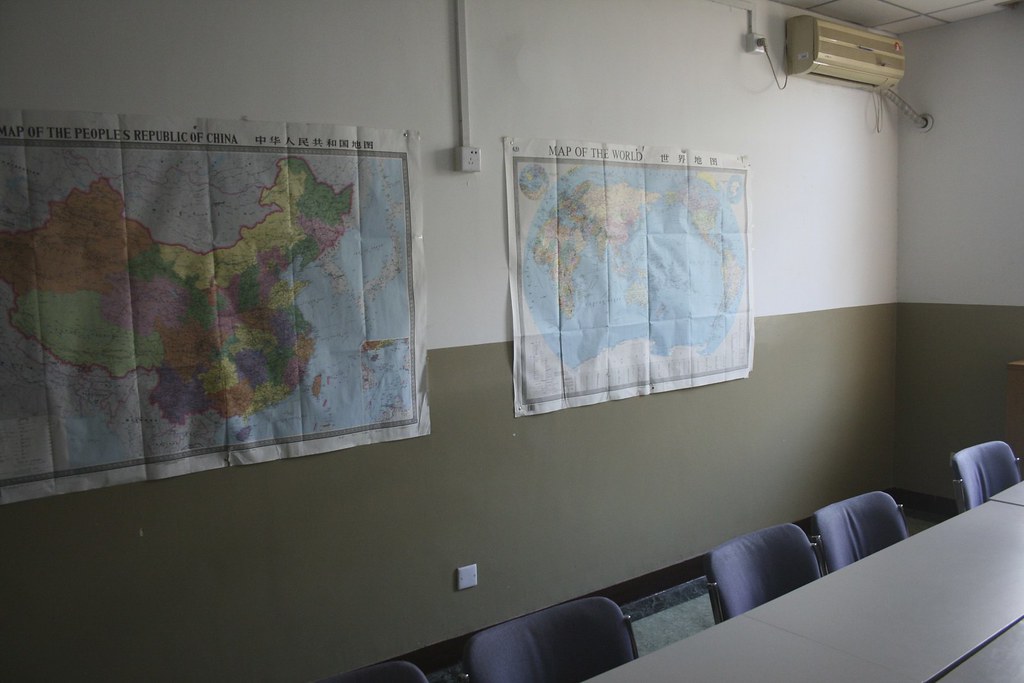
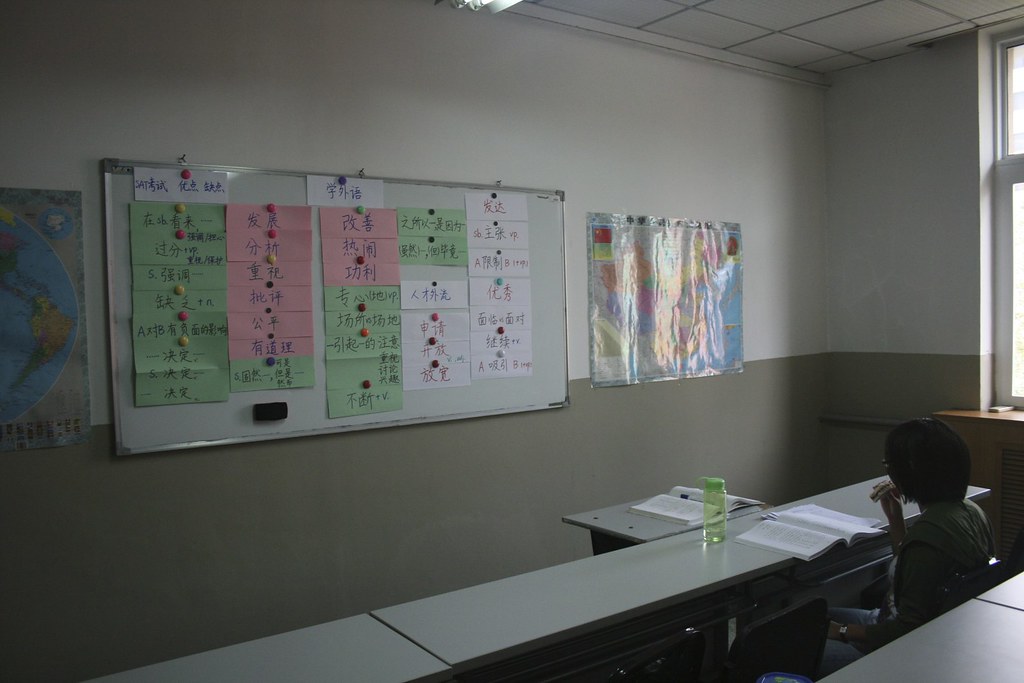
Every school that I’ve been to in China has a solid band of color painted to about 4 feet up the wall. It’s just something I’ve started to notice; my dorm has it, the high school across from our building has it, the middle school we visited in the countryside has it. It actually breaks up the space really well, and like everything else in China, the walls and the paint look old, but spotless and well used.
We went to this school to practice our Chinese as well as letting the middle school students practice their English on us, probably the first foreigners they’ve ever had a chance to talk to.

Walking up to the middle school, it looks devoid of life. At the start, it seems to be a massive gate marking a path to nowhere, a stretch of cracking pavement surrounded on either side by yellowed grass. The road turns a corner into a tiled courtyard, corralled by whitewashed walls. The school’s four basketball hoops preside over empty space.
Chinese has a particular word, nongcun, whose meaning includes everywhere that’s not within a modern city, including everything from Beijing’s suburbs to the most spare farming village in the vastness of China. It seems a little unfair to call the space the school is in “the countryside”, but my teachers continuously used that word, nongcun, to describe where we were going. Every classroom has a laptop and a projector descending from the ceiling, the school is only an hour and a half ride out of the center of Beijing, it’s modernized. So why “countryside”?

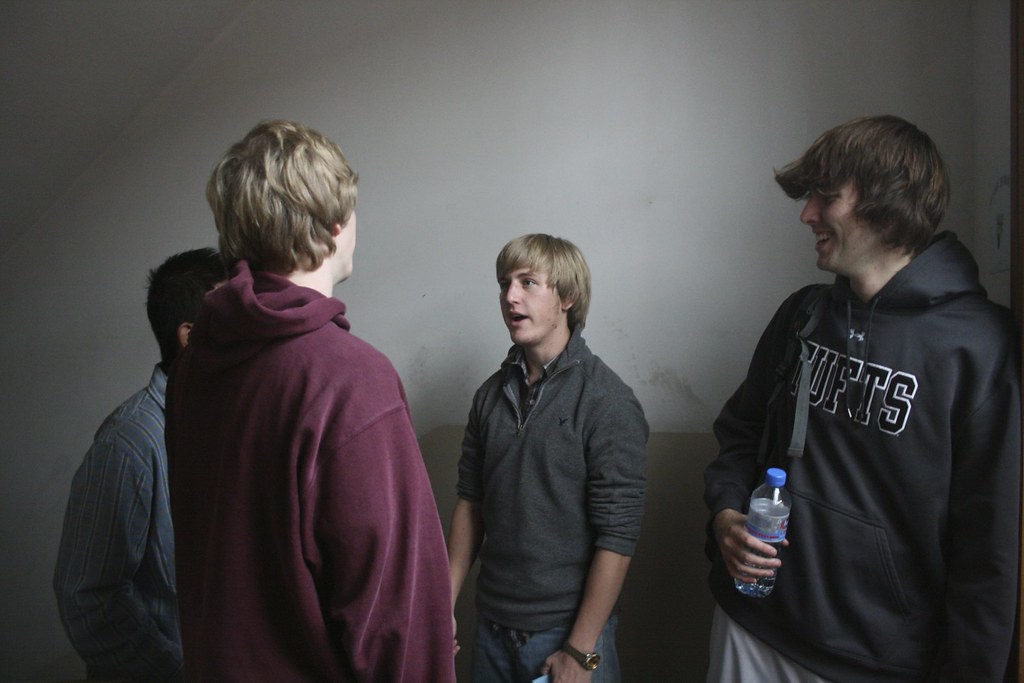
We foreigners took our turn first presenting a few aspects of American and Japanese culture to the middle school students. The topics we covered were mostly in relation to ordinary life, the routine of American middle school and college students, what after school activities are. There are differences between what we went through and what these middle school students are going through now that are easily overlooked.

For one, Chinese school’s emphasis on foreign language, specifically our own mother tongue, is a far cry from when I started Spanish in 7th grade. Talking to one of the students, I asked how long he had been studying English. Turns out he started when he was three.

After we finished our reports, the middle school students one by one went up to the podium, loaded their powerpoints into the overhead projector through the laptop in the desk, and started speaking.
Powerpoints? Overhead projectors? Granted, it’s the Future now, and it wasn’t when I was in middle school, but half the time our college classrooms’ projectors broadcast a lovely blue and little else.

The students’ topics ranged from their Best Friends, how much they love their parents, how they don’t study hard enough, all the way to Basketball. Basketball is something of a religion among Chinese guys, and the middle school kids were no exception. Clearly some things aren’t too different from our respective hometowns. “Kobe Bryant is my hero,” said one student falteringly, “that’s why my English name is Basketball Star.”

As far as the students’ English went, it was pretty good, especially considering they’re in middle school. The kids’ faces were visibly pained as they struggled through the words, often slipping into a mix something like Chinese syllables strung into English sentences. We probably looked the same way to them. We foreigners, not wearing the middle school track suit-uniform, trying to speak to a bunch of Chinese middle school students in their own language while they tried to speak to us in ours.

When the classroom presentations were finished we all left together to take a picture outside of the school. The sun glared off the paving stones and the wind blew Beijing’s dry cold through the doorways. As our teachers took the photos, standing next to me was one kid I had been talking to for most of our time at the school. He was tall for his age and tall for China and gangly as any middle school boy. He looked out into the sun and squinted his eyes and said into the air, “so you’ll be going back to America soon, right?”
“Have you liked living in Beijing?”

China has a countryside, a nongcun where people make their living farming. It’s not here, though. Here is Beijing. I would be willing to bet within 5 years the city will encompass this middle school and the students will spend the rest of their lives working in the city, for the city. Right now they’re just still growing up.